EAST WEST EUROPEAN IMPORTS


External link opens in new tab or window(707) 422-6841


1722-B North Texas St, Fairfield, CA 94533

Menu
  • External link opens in new tab or window
  • External link opens in new tab or window
  • External link opens in new tab or window
  • External link opens in new tab or window
  • External link opens in new tab or window

Vehicle REPAIR

and Diagnostic Services

For BMW, Mercedes Benz, Porsche, MINI, and classics.

Contact UsContact Us

Unparalleled Auto Repair


Column

Vehicle Engine Parts

Column

For the Most Common Vehicle Troubles

At East West European Imports, we provide experience and dedication to providing auto repair assistance to clients in Fairfield, CA. For more than 45 years, the work has been up to date using cutting-edge vehicle diagnostic systems and high-tech equipment to fix our customers’ most common vehicle issues, such as vehicle coding and programming issues, battery issues and other electronics as well as other common issue like damaged ignition coils, faulty oxygen sensors, and conductor plate coupler.

East West European Imports.

Take advantage of our vehicle diagnostic systems in Fairfield, CA. Give us a call today to learn more. You may also contact us to purchase spare vehicle parts. We hope to hear from you soon!

Vehicle Engine Parts 2
Vehicle Part Repair
Vehicle Part Repair
Vehicle Parts
Vehicle Parts
Vehicle Parts 2
Vehicle Parts 2
Vehicle Parts 3
Vehicle Parts 3
0


My Clients’ Usual Vehicle Dilemmas

Column

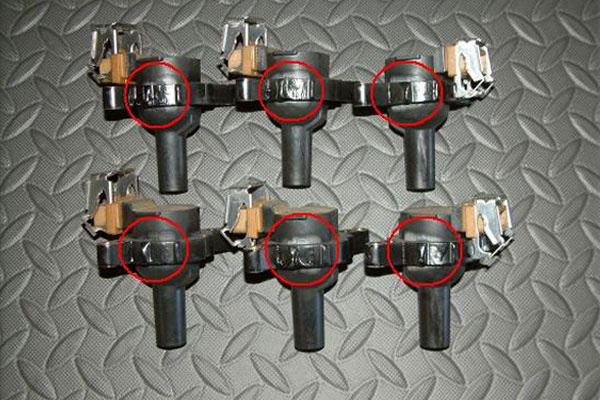
BMW ignition coils do go faulty from time to time. The ignition coils shown in figure 1 were from a 1999 BMW 323i. The vehicle came to us with a check engine MIL on. The technician noticed that there were ignition misfires present. Running module scan with our BMW GT1 diagnostic system confirmed the technician's thoughts. The GT1 revealed that the number 4 cylinder was misfiring.
 
The technician removed the number 4 ignition coil to inspect for any irregularities. The spark plug was properly torqued, but the ignition coil itself had signs of arcing, and the plastic housing was melted as well. See the red circles in figure 1. With this discovery, the technician decided to remove all of the ignition coils for inspection. Sure enough, all of the ignition coils were suffering from the same affliction.
 
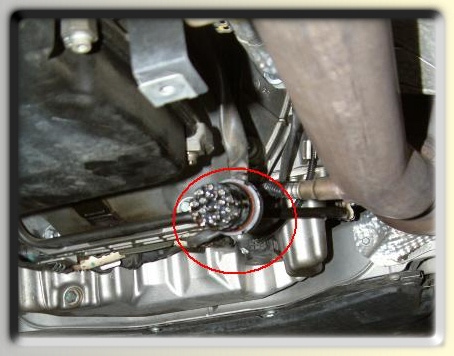
This vehicle also had fault codes for oxygen sensors. The technician recommended to the customer that the four oxygen sensors, six ignition coils, six spark plugs, and the fuel filter be replaced. Also recommended was updating of the DME with the latest software version. The customer authorized the repairs. After the repairs were completed, engine performance was smooth and powerful, and no fault codes returned. Mercedes 722.6 transmissions are pretty durable mechanically. However, the Achilles heel of the 722.6 is the conductor plate coupler. See figure 2a, red circle, shown disconnected from the transmission.
 
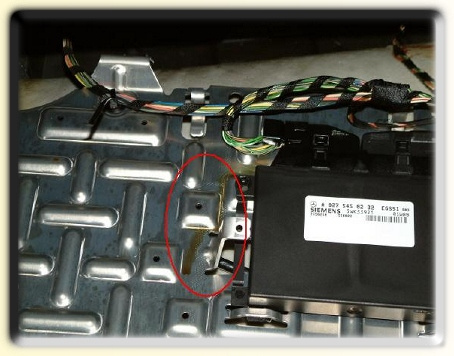
The conductor plate coupler provides the connection to the wiring harness for the transmission control module. See figure 2b, black box.
 
The issue with the conductor plate coupler is that it is prone to leaking. The transmission fluid leaks into the coupler and creates electrical shorts. This situation can cause check engine MIL, irregular shifting, limp mode, or damage to the transmission control module.
 
In some cases, the transmission fluid can leak all the way up to the transmission control module through approximately three feet of wiring. See figure 2b, red circle, transmission fluid leakage.
 
As is the case with many European automobiles, Mercedes has very sensitive electronics. Electrical shorts or spikes can "zap" out a control module in no time. Even though fuses are in place to protect the electrical components, they don't always react quickly enough. It’s common to find a "zapped" out module and all fuses in perfect condition.
 
The BMW E46 3-series model uses two separate fuel tanks. The fuel system uses a jet system to transfer fuel from the left tank to the right tank. When fuel level irregularities come about, our BMW technician can access the amount of fuel in each tank via instrument cluster. See the red-circled area in Figure 3a. The first three digits (015) is the amount of fuel in liters in the left tank. The last three digits (327) is the amount of fuel in liters in the right tank. 1.5 liters plus 32.7 liters is equal to 34.2 liters. The fuel capacity for the E46 model is 63 liters, 34.2 liters is equal to slightly more than ½ the fuel capacity. Notice the fuel gauge in Figure 3a; the needle is slightly past the half mark, so this fuel gauge is reading accurately.

Column

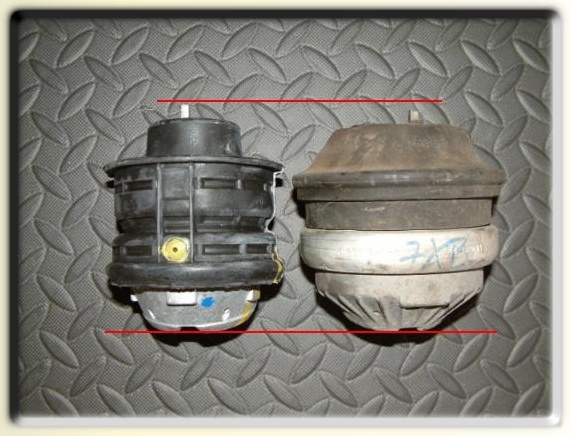
Mercedes motor mounts are filled with very thick oil. The oil dampens the vibrations from the engine. Over time, the rubber bladder containing the oil can stretch or crack, allowing the oil to spread out or leak. The result is a "sunken" motor mount. See the red height reference lines in Figure 4a. The motor mount on the right is an old sunken mount, and the one on the right is a new updated style motor mount (both mounts are for the same vehicle).
 
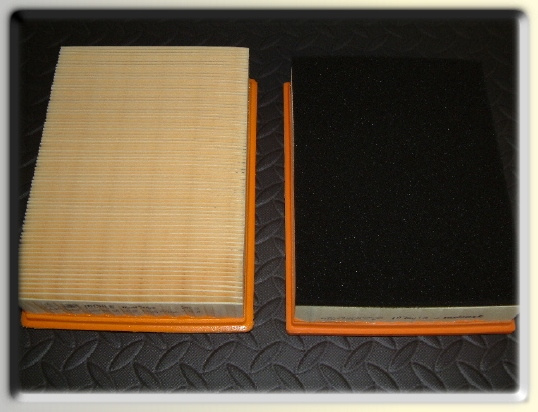
Sunken motor mounts cause the engine to sink in the engine bay. This situation changes the geometry of the driveline. The result is added strain on the transmission, engine wiring harness, and hoses. Also, vibrations from the engine transmit into the chassis, which can fatigue and loosen fasteners. There are two separate air filter designs for the BMW E39 and E46 chassis 6 cylinder engines. Figure 5a displays the two different designs. The air filter on the left is a "light duty" filter. The air filter on the right is a "heavy duty" filter with a layer of black foam attached to the underside.
 
To avoid potential MIL (Malfunction Indicator Lamp) warnings, I prefer to install the heavy duty filters on the 6 cylinder E39 and E46 chassis vehicles.
 
Under certain circumstances, the light duty filter can have a negative effect on the air/fuel mixture. The mass air flow sensor can compensate for the less restrictive filter, but this shifts the calibration closer to the limits of its operation parameters, making it easier for MIL warnings to pop up on the instrument cluster.
 
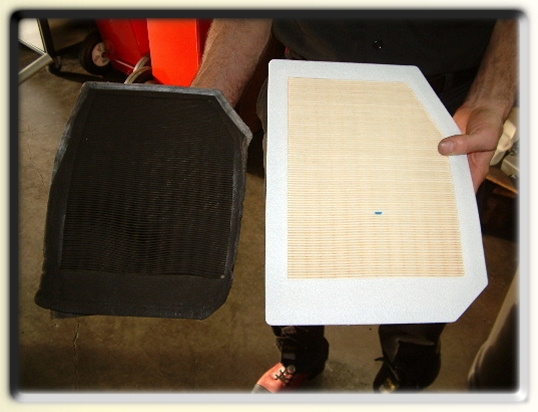
The air filter in Figure 6a is an air filter from a 1995 Porsche 993/911. The filter was not replaced for quite some time, resulting in an extremely restricted filter. In fact, this filter was partially "sucked" into the air box by the choking engine!
 
The air filter on the right is the same filter (albeit new). Notice the white base flanges compared to the distorted flanges on the old filter.
 
I recommend replacement of engine air filter(s) on all automobiles at no more than 30,000-mile intervals (or cleaning and oiling if it’s a K&N filter).
 
Dirty air filters rob your engine of performance and fuel economy, so keep track of the condition of your air filters.

East West European Imports


Column


1722-B North Texas St
Fairfield, CA 94533

Column


External link opens in new tab or window(707) 422-6841

Column


Monday to Thursday: 9:00 AM – 6:00 PM
Friday: 9:00 AM – 5:00 PM
Saturday: By Appointment
Sunday: Closed


close lightbox