|
|





"winning is endurance" |















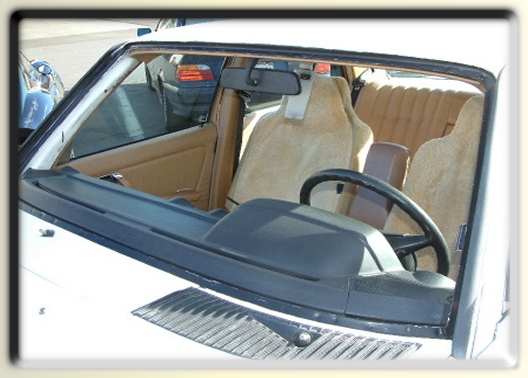
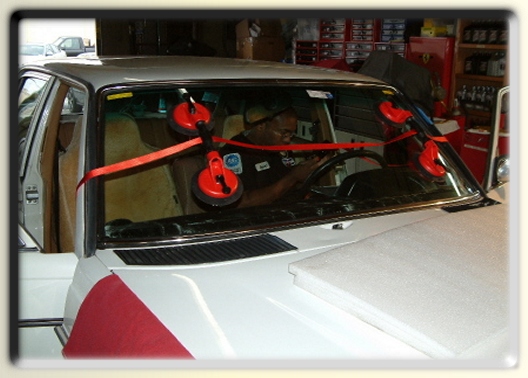
Q) Why should I have my vehicle serviced at your facility rather than the dealership, or any other automotive repair facility? A) There are several advantages to our service versus the dealership and other automotive repair shops. Chief among these is the fact that we put quality and accuracy first. That is, when we repair or service a vehicle we go to great lengths to assure that the vehicle will not come back with the same issue(s) again. Most automotive repair shops conduct their business based on volume (get the car in and get it out as fast as possible). Rushing through a repair may impress the customer at the moment, but the accuracy and quality goes right out the window, and there is a higher probability that the same issue(s) will return. The initial time savings on the first visit is completely negated when a customer has to take time out of his/her schedule to bring the vehicle back to the repair shop. Our facility has the same factory diagnostic and programming equipment that the official dealerships have (BMW/Mini GT1 and SSS systems, Porsche PST2 and PIWIS systems, Mercedes SDS system). This equipment is very difficult for an independent automotive repair shop to acquire. Besides our facility, the only other place that has factory equipment is the dealerships which are approximately 30+ miles away. This equipment is crucial to properly diagnosing and repairing these vehicles. The generic equipment that the average automotive repair shops use have many limitations. As a result, the technician will replace a number of components in a system in order to hope that it will solve the problem. Some, if not most of the parts may have not needed replacement. Our technicians complete several technology update classes each year to stay on par with the advances in vehicle technology. Our head technician has been servicing and repairing Mercedes, BMW, and Porsche automobiles for more than 35 years. He has seen the evolution of these automobiles, and has maintained his technical knowledge via update courses as engineering advances progressed. Q) Other european repair shops state that they have "The Latest Equipment." Your repair facility advertises that you have "Up-To-Date Factory Diagnostic Equipment." What are the differences between the two statements? A) There are a number of differences. Chief among the differences is that "The Latest Equipment" does not mean it has the same capabilities as "Factory Equipment." The factory equipment is developed with the vehicle, and has 100% access capability to all electrical systems/control modules in the vehicle. Aftermarket equipment does not have 100% access to electrical systems/control modules due to proprietary factory software restrictions. As a result, a repair facility with only aftermarket diagnostic equipment can only receive generalized results. With generalized results, the technician can only speculate on recommended repairs. Most certainly, parts will be replaced at these shops that may or may not need replacing. Additionally, if a repair shop advertises that they are specialists for certain vehicle makes, but do not possess factory equipment, will end up selling the customer short. Remember, 50% of doing a task competently is having the right tools for the job, and the other %50 is having the knowledge to use the tools correctly. Q) Does the diagnostic time apply toward the repair? A) Yes and no. It depends on the nature of the problem. During diagnostics, if some components require removal, and if those components require removal in order to perform repairs, then some of the diagnostic time can be applied toward the repair. Conversely, if the problem is diagnosed without the need to remove components, then no portion of the diagnostic time will not apply to the repair. Q) Can I purchase parts through your facility and install them myself? A) Yes, we sell factory o.e.m. parts at competitive prices compared to the dealerships. Also, another benefit is that we save you a 30+ mile trip to the dealship. In most cases, if we do not have the part you are looking for, we can acquire it by 11:00 am the next business day. If the part that you are looking for is a non-special order item, then no shipping charges will apply. However, keep in mind that the majority of parts ordered through us are non-returnable, so you'll need to be very sure that you need the part before ordering. Q) Does your facility install new tires? A) Yes. We remove the old tires, clean the rims inside and out to remove brake dust and road grime (this allows the wheel weights to adhere better and looks nicer), install wheel weights on the inside surface of the rims (looks nicer than on the outer surface), mount and balance the wheel/tire combo, and install on the vehicle with a manually operated torque wrench (no risk of damaging the threads, or over/under torquing). Q) Do I need to service my automatic transmission? A) Yes. Some European car manufacturers say their transmissions do not need servicing, but the odd thing is they sell transmission service items in their parts departments. In fact, automatic transmissions should be serviced every 40,000 to 50,000 miles. A typical transmission service involves replacement of the transmission filter, pan gasket, and ATF flush. On Mercedes transmissions we replace the leak-prone conductor plate coupler. We only use the proper dedicated factory brand ATF, and flush the transmission, torque converter and transmission cooling system. Also, at this time it is highly recommended to change the fluid in the differential(s), and transfer case (if equipped). Q) Does your facility replace windshields? A) Yes, we only install official factory dedicated windshields. Aftermarket windshields have distorted optics, and are poor fitting, which will result in whistling noises while driving and water leakage. Q) Does your facility install parts that I have purchased elsewhere? A) Occasionally, Yes, but depends on the situation and the circumstances. Our policy is that we do not install customer-supplied parts due to the part(s) being from unknown supplier, brand, and condition. In the rare cases that we have installed customer-supplied parts, we do not provide a warranty of any kind on the diagnostics, parts, or labor. This due to the fact that unknown parts can undermine our precision in diagnostics and labor. Q) What happens to my old car parts after they have been replaced? A) We save the old parts for you to examine, and answer any questions you may have about them. If you do not want the old parts, we give them to a scrap metal recycler. In fact, we recycle nearly every old part, waste oil, coolant, batteries, aerosol cans, and plastic and cardboard packaging materials. Old, dirty, oily shop towels are picked up by a cleaning/disposal service - not thrown in the trash where it can harm the environment. Even the empty ink printer cartridges that we print our invoices with are sent back to the manufacturers for recycling. Q) Do the brake discs need to be replaced on each brake service? A) Yes in the majority of circumstances. If a new pad is used with a worn brake disc, unpredictable results can occur (screeching, vibrations, and steering "pull" for example). Some facilities will "turn" the brake discs, but this makes the disc slightly thinner, and more prone to warpage. Also, the cost of turning the brake discs is not far off of purchasing new discs. When the brake pads and discs are replaced at the same time, they can wear together, and brake performance remains more consistent. By comparison, a new brake pad will not immediately conform to the wear present on an old disc, so brake performance won't be optimum. Q) Is it safe to continue to drive my vehicle with a dash warning light on? A) No. All dash warning lights should be diagnosed immediately to avoid an unsafe condition and/or further damage to the vehicle. For example, if the SRS warning light is on while you are driving, then the SRS system will not function to it's full potential - i.e. an airbag may or may not deploy in the event of an accident. Q) I purchased an older European automobile for fair market value. Why are the repairs so expensive? A) Older European automobile parts can often exceed costs for parts on newer vehicles of the same manufacturer. The main reason for the price premium is that parts for older European cars are in shorter supply. Also, the parts prices do not depreciate with market value of the vehicle. So, the $80,000 car you bought for $20,000 does not mean that the parts will be 1/4 of the price as well. In most cases, the parts will be at least as much as when the car was new (if not more). Q) Why do many dealerships and independent repair shops neglect to show me the old parts that they replace? A) It would be much speculation on why, but to assure the validity of the repair you should always ask to see the old parts, and have the technician point out the problem area(s) of the part. Q) I have read about performance modifications and repair information on Internet forums and other websites. Can your facility perform these modifications and repairs on my vehicle? A) Yes, but first, be very cautious what information you believe on the Internet. Modern automobiles in general are finely engineered. Changing the relationship in the way the components function together typically creates a "domino effect." That is, a change in one component typically requires changes in related components down the line (if you want positive results). For a basic example, cold air intakes allow more air (denser air) into the engine. With more air, the engine requires more fuel (some fuel injection systems can compensate for this to some extent). You won't get the full benefit of this setup without getting this increase in air/fuel flow out of the engine (in the form of increased exhaust), so now a less restrictive exhaust is needed. What about ignition timing? Advancing ignition timing a bit usually boosts engine performance (which is one of the things most performance EFI chips do), but only if you are going to use premium fuel or race fuel to avoid detonation. What about cam timing? With changes in air intake, air/fuel ratio, exhaust flow, and ignition timing, the stock cam timing will not be ideal, so now adjustable cam sprockets need to be installed and fine tuned. The list goes on. If you are looking at turbos, the complexity of all this information goes through the roof. There is also the matter of emissions regulations - are your modifications legal? Also, keep in mind that dyno charts that you see online never seem to mention the "quality" of the powerband; sure, 500 horsepower out of a four cylinder engine sounds impressive, but not if it all comes in at 7000 rpm and above (how often do you drive around town at 7000 rpm?). As for repairs on late model European automobiles, the majority of service/repair work typically involves clearing fault codes and/or setting adaptations with the proper factory diagnsotic equipment. Anything more involved than changing the engine air filter requires special tools/factory dignostic equipment. |
BMW |
MERCEDES |
PORSCHE |
FERRARI |
MINI |